Share
Barefoot vs Zero Drop Shoes: Understanding the Key Differences
Are you confused about the difference between barefoot shoes and zero drop shoes? You are not alone. These two terms are often used interchangeably, but they describe different types of footwear with distinct characteristics. In this guide, we break down exactly what each type of shoe is, how they compare to traditional footwear, who they are best for, and which one is right for your feet.
Whether you are searching for "what is a zero drop shoe" or wondering "are all barefoot shoes zero drop," this article answers every question with clear, research-backed information.
What Is a Zero Drop Shoe?
A zero drop shoe is any shoe where the heel and the forefoot sit at exactly the same height, meaning there is a 0mm difference (or "drop") between the heel and the toe. This is in contrast to traditional running shoes, which typically have a heel-to-toe drop of 10-12mm, and standard walking shoes with drops of 8-10mm.
The term "zero drop" refers specifically to the heel-to-toe differential and nothing else. A zero drop shoe can still have significant cushioning, arch support, and a thick sole. What makes it "zero drop" is simply that the heel is not elevated above the forefoot. Think of it as standing on a flat surface rather than standing on a wedge.
What Does Zero Drop Mean in Shoes?
"Drop" in footwear measures the height difference between the heel and the forefoot, expressed in millimeters. A traditional running shoe with a 10mm drop has a heel that sits 10mm higher than the toe area. A zero drop shoe has a 0mm difference, placing your foot in a position similar to standing barefoot on the ground. This flat platform encourages a more neutral posture from the ankles up through the spine.
Here is how drop levels compare across shoe types:
- Traditional running shoes: 10-12mm drop
- Low-drop shoes: 4-8mm drop
- Zero drop shoes: 0mm drop
- Barefoot shoes: 0mm drop (with minimal sole thickness)
What Are Barefoot Shoes?
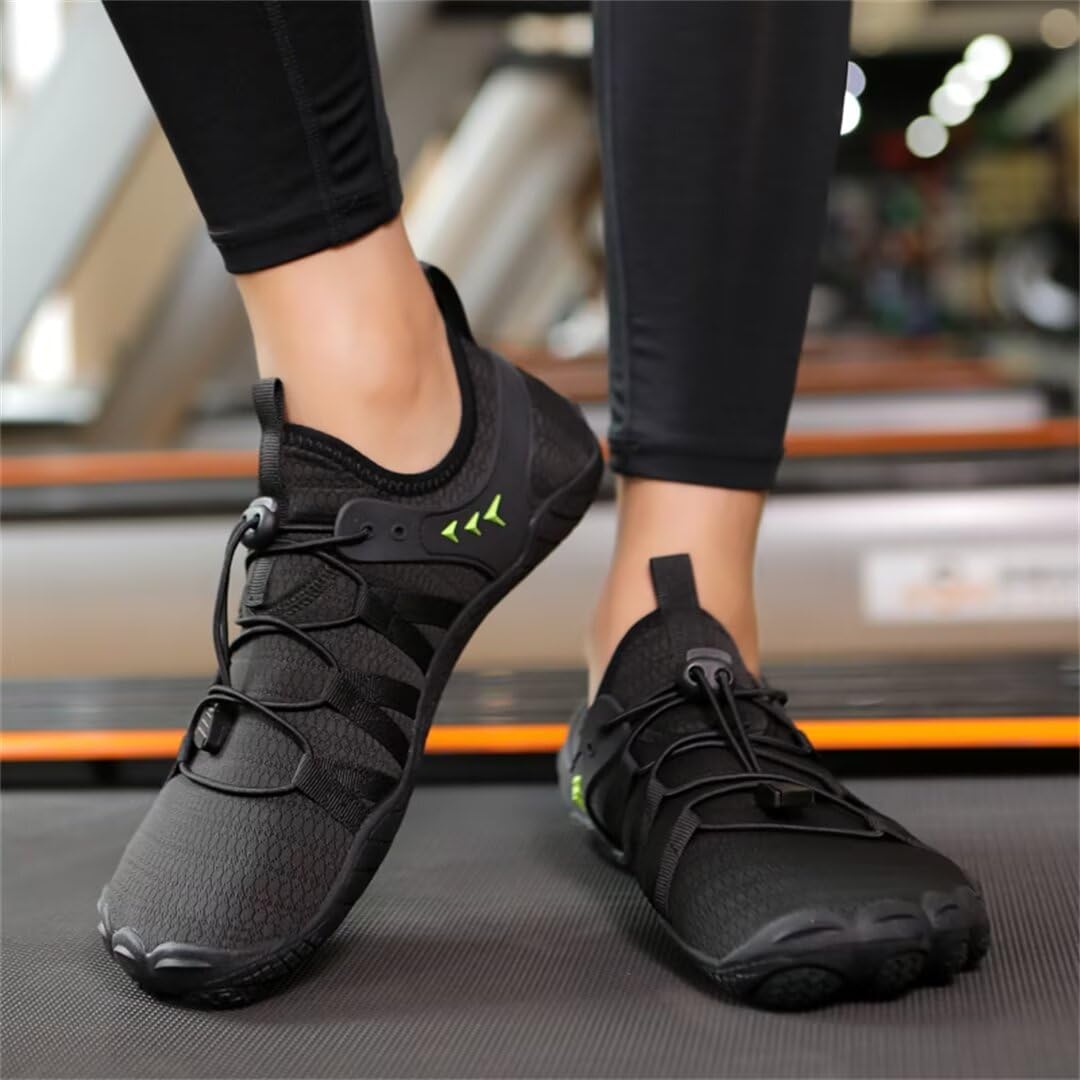
Barefoot shoes are minimalist footwear designed to replicate the sensation of walking barefoot while providing basic protection from the ground. They feature thin, flexible soles (typically 3-8mm), a wide toe box, zero drop, no arch support, and no motion control features. The goal is to let your feet function as naturally as possible.
Key characteristics of barefoot shoes include:
- Ultra-thin sole: Usually 3-8mm thick, allowing you to feel the ground beneath your feet (proprioceptive feedback)
- Wide toe box: Allows toes to spread naturally, improving balance and grip strength
- Zero drop: Heel and forefoot at the same height (all barefoot shoes are zero drop)
- High flexibility: The sole bends and twists easily in all directions
- No arch support: Forces intrinsic foot muscles to provide their own support
- Lightweight: Typically 100-200 grams per shoe
The primary goal of barefoot shoes is to strengthen the 29 bones, 33 joints, and over 100 muscles, tendons, and ligaments in each foot by removing the artificial cushioning and support that traditional shoes provide. Explore our full collection of JOYO Zero-Drop Barefoot Shoes for the most natural foot experience.
Are All Barefoot Shoes Zero Drop?
Yes, all true barefoot shoes are zero drop. A flat platform with no heel elevation is a fundamental requirement of barefoot shoe design. However, not all zero drop shoes are barefoot shoes. This is the key distinction that confuses many people.
A zero drop shoe can have thick cushioning, a rigid sole, and a narrow toe box while still being zero drop. Brands like Altra make zero drop running shoes with 25-30mm of cushioning under your foot. These are zero drop but definitely not barefoot shoes.
Barefoot shoes take the zero drop concept further by also minimizing sole thickness, maximizing flexibility, widening the toe box, and removing all support features. Think of it this way: barefoot shoes are a subset of zero drop shoes, with additional requirements for minimalism.
Barefoot Shoes vs Zero Drop Shoes: Key Differences
While both shoe types share the zero drop platform, they differ significantly in construction, feel, and intended use. Here is a detailed breakdown:
Cushioning and Protection
Barefoot shoes are designed with minimal cushioning (3-8mm sole) to maximize ground feel and sensory feedback. They offer basic protection from sharp objects but encourage your feet to adapt and strengthen through direct ground contact.
Zero drop shoes can feature substantial cushioning (up to 30mm in some models) while maintaining the flat heel-to-toe profile. This provides significantly more impact protection, making them suitable for running on pavement or walking on hard surfaces for extended periods.
Sole Flexibility
Barefoot shoes have highly flexible soles that bend and twist in all directions, allowing your foot to move through its full natural range of motion with every step.
Zero drop shoes may have semi-rigid or moderately flexible soles, depending on the brand and intended use. Trail running zero drop shoes, for example, often have stiffer soles for rock protection.
Toe Box Width
Barefoot shoes almost always feature a wide, foot-shaped toe box that allows full toe splay. This is a defining characteristic of barefoot footwear.
Zero drop shoes vary widely in toe box design. Some brands offer wide toe boxes, while others maintain a more conventional, tapered shape despite having a zero drop platform.
Ground Feel
Barefoot shoes provide maximum proprioceptive feedback. You can feel the texture, temperature, and contour of the ground through the thin sole, which activates the roughly 200,000 nerve endings in each foot.
Zero drop shoes provide less ground feel due to thicker cushioning layers. The trade-off is more comfort on hard surfaces and longer distances.
Comparison Table: Zero Drop vs Barefoot vs Traditional Shoes
| Feature | Barefoot Shoes | Zero Drop Shoes | Traditional Shoes |
|---|---|---|---|
| Heel-to-Toe Drop | 0mm | 0mm | 8-12mm |
| Sole Thickness | 3-8mm | 10-30mm | 15-35mm |
| Cushioning | Minimal to none | Light to moderate | Moderate to heavy |
| Flexibility | Very high | Moderate | Low to moderate |
| Toe Box | Wide, foot-shaped | Varies by brand | Usually tapered |
| Ground Feel | Maximum | Minimal to moderate | Very little |
| Arch Support | None | None to minimal | Built-in |
| Weight (per shoe) | 100-200g | 200-350g | 250-400g |
| Best For | Foot strengthening, natural movement | Natural alignment with cushioned comfort | Impact absorption, structured support |
Benefits of Zero Drop Shoes
Zero drop shoes offer a wide range of benefits backed by research in biomechanics and podiatric medicine. Here are the key advantages of switching to a zero drop platform:
1. Improved Posture and Spinal Alignment
When your heel is elevated (as in traditional shoes), your body compensates by tilting the pelvis forward, increasing the curve of the lower back, and shifting the center of gravity. Zero drop shoes place your feet flat, which promotes a neutral pelvis position and healthier spinal alignment from the ground up. A 2018 study published in the Journal of Foot and Ankle Research found that zero drop footwear led to measurable improvements in standing posture among participants who transitioned over 12 weeks.
2. More Natural Foot Mechanics
Without a raised heel pushing you forward onto your toes, zero drop shoes allow your foot to strike the ground in a more natural pattern. Research from Harvard University's Skeletal Biology Lab has shown that flat footwear encourages a midfoot or forefoot strike during running, which distributes impact forces more evenly compared to the heel-striking pattern promoted by traditional cushioned shoes.
3. Strengthened Foot and Ankle Muscles
A 2019 study published in Medicine & Science in Sports & Exercise found that participants who wore minimalist footwear (including zero drop shoes) for six months showed significant increases in foot muscle size and strength. The intrinsic foot muscles that support the arch grew measurably stronger, similar to how removing a cast allows atrophied muscles to rebuild.
4. Reduced Knee and Hip Stress
Traditional shoes with elevated heels alter the kinetic chain from the ankle through the knee and hip. Research published in PM&R: The Journal of Injury, Function, and Rehabilitation (2014) demonstrated that zero drop shoes reduced knee joint loading by up to 12% compared to standard running shoes with a 10mm drop. This reduction in joint stress may help runners and walkers who experience chronic knee or hip discomfort.
5. Better Balance and Proprioception
Zero drop shoes keep you closer to the ground, which improves proprioception (your body's ability to sense its position in space). A 2020 study in Gait & Posture found that participants wearing flat footwear demonstrated improved balance metrics compared to those in traditional heeled shoes, particularly in older adults where fall prevention is a priority.
6. Achilles Tendon Health
Raised heels shorten the Achilles tendon over time. Zero drop shoes maintain the Achilles in its natural length, which can improve flexibility and reduce the risk of tendinopathy. However, transitioning too quickly can temporarily stress the Achilles, so a gradual switch over 4-8 weeks is strongly recommended.
7. More Even Weight Distribution
With a flat platform, body weight is distributed more evenly across the entire foot rather than concentrating pressure on the forefoot (as happens with elevated heels). This can reduce pressure points, callus formation, and metatarsal pain, especially during long periods of standing or walking.
8. Encourages Natural Gait Patterns
Zero drop shoes allow your foot and ankle complex to move through a complete, unrestricted range of motion during the gait cycle. This promotes the natural heel-to-toe rolling motion that human feet evolved to perform, rather than the choppy, heel-striking pattern that elevated shoes create.
9. Lower Injury Risk for Adapted Runners
A 2016 systematic review in the British Journal of Sports Medicine found that runners who had properly transitioned to lower-drop footwear showed reduced rates of knee injuries and repetitive stress injuries. The key finding was that the transition period (typically 8-12 weeks of gradual use) was critical to realizing these benefits without increasing short-term injury risk.
10. Versatility Across Activities
Modern zero drop shoes come in designs suitable for trail running, road running, hiking, walking, gym workouts, and everyday wear. Unlike barefoot shoes, which may feel uncomfortable on hard pavement for extended periods, zero drop shoes with adequate cushioning can handle virtually any activity. Explore our JOYO Trail Collection for outdoor adventures and our JOYO Urban Collection for everyday wear.
Are Zero Drop Shoes Good for Walking?
Yes, zero drop shoes are excellent for walking. Walking is a lower-impact activity than running, which makes zero drop shoes particularly well-suited for it. The flat platform promotes a natural heel-to-toe gait, improves posture during prolonged walking, and distributes weight evenly across the foot.
Walkers benefit from zero drop shoes because:
- Better posture on long walks: No forward lean caused by elevated heels
- Less fatigue: Natural alignment reduces compensatory muscle work
- Improved balance: A flat platform closer to the ground enhances stability
- Reduced joint stress: Even weight distribution means less concentrated pressure on knees and hips
- Stronger feet over time: Walking in zero drop shoes gradually strengthens intrinsic foot muscles
If you are transitioning from traditional walking shoes with a high drop, start by wearing zero drop shoes for 30-60 minutes per day and gradually increase. Most people adapt fully within 2-4 weeks for walking (compared to 8-12 weeks for running).
Are Zero Drop Shoes Good for Flat Feet?
Zero drop shoes can be beneficial for many people with flat feet, though the answer depends on the cause and severity of your condition. There are two types of flat feet: rigid (structural) and flexible (functional).
For flexible flat feet (the most common type), zero drop shoes can actually help by:
- Strengthening the intrinsic foot muscles that support the arch
- Encouraging the foot to develop its own natural support rather than relying on artificial arch support
- Promoting proper alignment from the ground up
- Allowing the foot to adapt and strengthen over time
A 2020 study in Clinical Biomechanics found that participants with flat feet who transitioned to minimal footwear showed increased arch height and improved foot muscle strength after 12 weeks. The researchers concluded that allowing the foot to work without rigid support could help address the muscular weakness that often contributes to flat arches.
For rigid flat feet (a structural condition where the arch cannot form), the transition should be more cautious and ideally supervised by a podiatrist. Some individuals with rigid flat feet may benefit from zero drop shoes with moderate cushioning, while others may need continued arch support.
Recommended approach for flat feet: Start with a cushioned zero drop shoe (not a fully minimalist barefoot shoe), wear it for short periods initially, and increase duration gradually. If you experience pain, consult a podiatrist before continuing. Browse JOYO's full collection to find a zero drop shoe that works for your feet.
When Should You Choose Barefoot Shoes Over Zero Drop Shoes?
Barefoot shoes are the better choice when your primary goals are:
- Maximum foot strengthening: The thin sole forces intrinsic foot muscles to work harder
- Sensory reconnection: You want to feel the ground and improve proprioception
- Toe health: The wide toe box and flexible upper help correct bunions and hammertoes over time
- Short to moderate distances: Casual walking, errands, light hikes, indoor activities
- Already adapted: You have been wearing minimal footwear and your feet are conditioned
Zero drop shoes are the better choice when:
- You need cushioning: For running on pavement, long hiking days, or standing for hours
- You are transitioning: Zero drop shoes with cushioning are a gentler first step away from traditional shoes
- You want versatility: One pair for multiple activities including trail running and everyday wear
- Surface protection: Rocky trails, construction sites, or other rough terrain
Many experienced minimalist footwear users rotate between both types depending on the activity. Barefoot shoes for casual days and short walks, zero drop shoes with more cushioning for long runs or demanding hikes. For a deeper comparison that includes traditional shoes, read our guide on Barefoot vs Minimalist vs Traditional Shoes.
How to Transition to Zero Drop or Barefoot Shoes
Transitioning too quickly is the most common mistake people make with zero drop and barefoot footwear. Your feet, ankles, and calves have adapted to elevated heels over years or decades. Here is a safe transition timeline:
Weeks 1-2: Introduction
- Wear zero drop shoes for 30-60 minutes per day for walking only
- Do foot strengthening exercises: toe spreads, calf raises, single-leg balance
- Continue wearing your regular shoes for the rest of the day
Weeks 3-4: Gradual Increase
- Increase zero drop wear time to 2-4 hours daily
- Begin light activities (errands, casual walks) in zero drop shoes
- Pay attention to any calf soreness or Achilles discomfort (normal in small amounts)
Weeks 5-8: Adaptation
- Wear zero drop shoes for most of the day
- Begin incorporating them into exercise (walking, gym, light jogging)
- If transitioning to barefoot shoes, start wearing them for 30-60 minutes alongside your zero drop shoes
Weeks 9-12: Full Transition
- Zero drop shoes can become your primary footwear
- Gradually increase running distance in zero drop shoes (no more than 10% per week)
- Continue foot strengthening exercises for long-term maintenance
For more information on how zero drop footwear affects your body, see our in-depth article on Zero Drop Shoes & Musculoskeletal Health.
Frequently Asked Questions (FAQs)
What is a zero drop shoe?
A zero drop shoe is a shoe where the heel and forefoot are at the same height, with a 0mm height difference between them. Unlike traditional shoes that have a raised heel (typically 8-12mm higher than the toe), zero drop shoes place your foot on a completely flat platform. This promotes natural foot alignment and a more neutral posture. Zero drop shoes can range from minimalist with thin soles to well-cushioned with thick midsoles.
What does zero drop mean in shoes?
"Drop" measures the height difference in millimeters between the heel and the forefoot of a shoe. "Zero drop" means there is 0mm of difference, so the heel and toe are level. Traditional running shoes typically have a 10-12mm drop, meaning the heel sits 10-12mm higher than the forefoot. A zero drop design keeps your foot in the same position it would be in when standing barefoot on flat ground.
Are all barefoot shoes zero drop?
Yes, all genuine barefoot shoes have a zero drop design. A flat, level platform is one of the defining characteristics of barefoot footwear. However, the reverse is not true: not all zero drop shoes are barefoot shoes. Zero drop shoes can have thick cushioning, moderate flexibility, and varying toe box widths while still maintaining a 0mm heel-to-toe drop. Barefoot shoes go further by also requiring thin soles, maximum flexibility, wide toe boxes, and no arch support.
What are the benefits of zero drop shoes?
The main benefits of zero drop shoes include improved posture and spinal alignment, more natural foot mechanics, stronger foot and ankle muscles, reduced stress on knees and hips, better balance and proprioception, healthier Achilles tendon length, more even weight distribution, and a lower risk of repetitive stress injuries (once properly adapted). Research consistently shows these benefits emerge after a proper transition period of 8-12 weeks.
Are zero drop shoes good for walking?
Yes, zero drop shoes are excellent for walking. The flat platform promotes a natural heel-to-toe gait pattern, reduces joint stress, and improves posture during extended walks. Walking is a lower-impact activity than running, which means the transition to zero drop shoes is typically easier and faster for walkers (2-4 weeks vs 8-12 weeks for runners). Start with shorter walks and gradually increase duration to allow your feet and calves to adapt.
Are zero drop shoes good for flat feet?
For most people with flexible flat feet (the most common type), zero drop shoes can be beneficial. They strengthen intrinsic foot muscles that support the arch, potentially improving arch height over time. A 2020 study in Clinical Biomechanics showed increased arch height in flat-footed participants who wore minimal footwear for 12 weeks. However, people with rigid (structural) flat feet should consult a podiatrist before transitioning, as they may need a more cautious approach or continued arch support.
Are zero drop shoes better for your knees?
Research suggests zero drop shoes can reduce knee joint loading. A study published in PM&R found that zero drop shoes reduced knee stress by up to 12% compared to traditional running shoes with elevated heels. The flat platform eliminates the forward lean caused by raised heels, which reduces the compensatory force that the knee must absorb. However, a sudden switch without proper transition can temporarily increase stress on the calves and Achilles tendon, so gradual adaptation is essential.
What is the difference between zero drop and barefoot shoes?
Zero drop refers only to the heel-to-toe height differential being 0mm. A zero drop shoe can still have thick cushioning (up to 30mm), moderate flexibility, and a narrow toe box. Barefoot shoes are a more specific category: they require zero drop PLUS thin soles (3-8mm), high flexibility, a wide foot-shaped toe box, no arch support, and minimal weight. All barefoot shoes are zero drop, but most zero drop shoes are not barefoot shoes.
Are zero drop shoes good for plantar fasciitis?
Zero drop shoes can help with plantar fasciitis in the long term by strengthening the muscles and tissues that support the plantar fascia. However, they should not be introduced during an acute flare-up. If you have active plantar fasciitis, start with a cushioned zero drop shoe (not a minimalist barefoot shoe) and transition very gradually. The strengthened foot muscles from wearing zero drop shoes can help prevent future episodes. Always consult a healthcare professional for personalized advice on managing plantar fasciitis.
How long does it take to adjust to zero drop shoes?
The adjustment period depends on your activity level and how different zero drop shoes are from your current footwear. For walking, most people adapt in 2-4 weeks. For running, expect 8-12 weeks of gradual transition. Start by wearing zero drop shoes for 30-60 minutes per day and increase by about 30 minutes each week. Common sensations during transition include mild calf soreness and Achilles tightness, which are normal and should resolve as your muscles adapt. If you experience sharp pain, reduce wear time and consult a professional.
Are zero drop shoes good for standing all day?
Zero drop shoes with adequate cushioning can be excellent for standing all day. The flat platform distributes weight more evenly across the entire foot compared to heeled shoes, which concentrate pressure on the forefoot. This reduces fatigue, pressure points, and lower back strain. However, a fully minimalist barefoot shoe with a thin sole may not provide enough cushioning for all-day standing on hard surfaces like concrete. Choose a zero drop shoe with at least 10-15mm of midsole cushioning for prolonged standing.
Who should NOT wear zero drop shoes?
Zero drop shoes are not ideal for everyone. You should be cautious or avoid them if you have an acute Achilles tendon injury (zero drop places more demand on the Achilles), severe rigid flat feet without medical guidance, active plantar fasciitis during a flare-up, or if you need to stand or run long distances immediately without a transition period. People recovering from foot or ankle surgery should also consult their doctor before switching to zero drop footwear. For most healthy individuals, however, a gradual transition to zero drop shoes is both safe and beneficial.
What is the difference between zero drop and minimalist shoes?
"Zero drop" describes one specific feature: the 0mm heel-to-toe height difference. "Minimalist" is a broader category defined by the Minimalist Index, which scores shoes on factors including weight, flexibility, stack height, motion control, and heel-to-toe drop. A shoe can be zero drop without being minimalist (thick cushioning, rigid sole), and theoretically a shoe could be considered minimalist while having a small drop. Barefoot shoes score highest on the Minimalist Index because they maximize all minimalist characteristics.
Why are zero drop shoes better than traditional shoes?
Traditional shoes with elevated heels were designed based on the assumption that cushioning and heel support prevent injuries. However, modern research challenges this view. Zero drop shoes align more closely with how the human foot evolved to function over millions of years of barefoot locomotion. They promote natural gait patterns, strengthen foot muscles instead of weakening them with support, reduce compensatory stress on knees and hips, and improve balance and proprioception. That said, the transition period is critical, and traditional shoes remain appropriate for certain medical conditions.
What is zero drop footwear?
Zero drop footwear is any type of shoe, boot, or sandal where the heel and forefoot sit at the same height (0mm drop). This category includes running shoes, hiking boots, casual shoes, sandals, work boots, and dress shoes. The zero drop design has expanded from a niche running shoe feature to a widely available option across all footwear categories, as more people become aware of the biomechanical benefits of a flat platform.
Benefits of thicker sole zero drop shoes?
Thicker sole zero drop shoes combine the alignment benefits of a flat platform with the comfort and protection of traditional cushioning. Benefits include impact absorption on hard surfaces, protection from sharp rocks and terrain on trails, comfort during long-distance running or all-day wear, easier transition from traditional shoes (since the cushioning is familiar), and reduced stress on the Achilles and calves compared to thin-soled barefoot shoes. They are an excellent middle ground for people who want natural alignment without giving up cushioning.
Conclusion: Which Is Right for You?
Both barefoot shoes and zero drop shoes promote natural foot function, but they serve different needs. Barefoot shoes are ideal for those committed to maximum foot strengthening and natural movement, while zero drop shoes offer a more versatile and cushioned approach to natural alignment.
If you are new to natural footwear, start with a cushioned zero drop shoe and gradually work toward more minimalist options as your feet strengthen. If you are experienced with minimal footwear, barefoot shoes for daily wear combined with cushioned zero drop shoes for high-impact activities gives you the best of both worlds.
Whatever you choose, the most important step is making the transition gradually. Your feet will thank you.
Shop JOYO Zero-Drop Barefoot Shoes and find the perfect pair for your journey toward healthier, stronger feet.