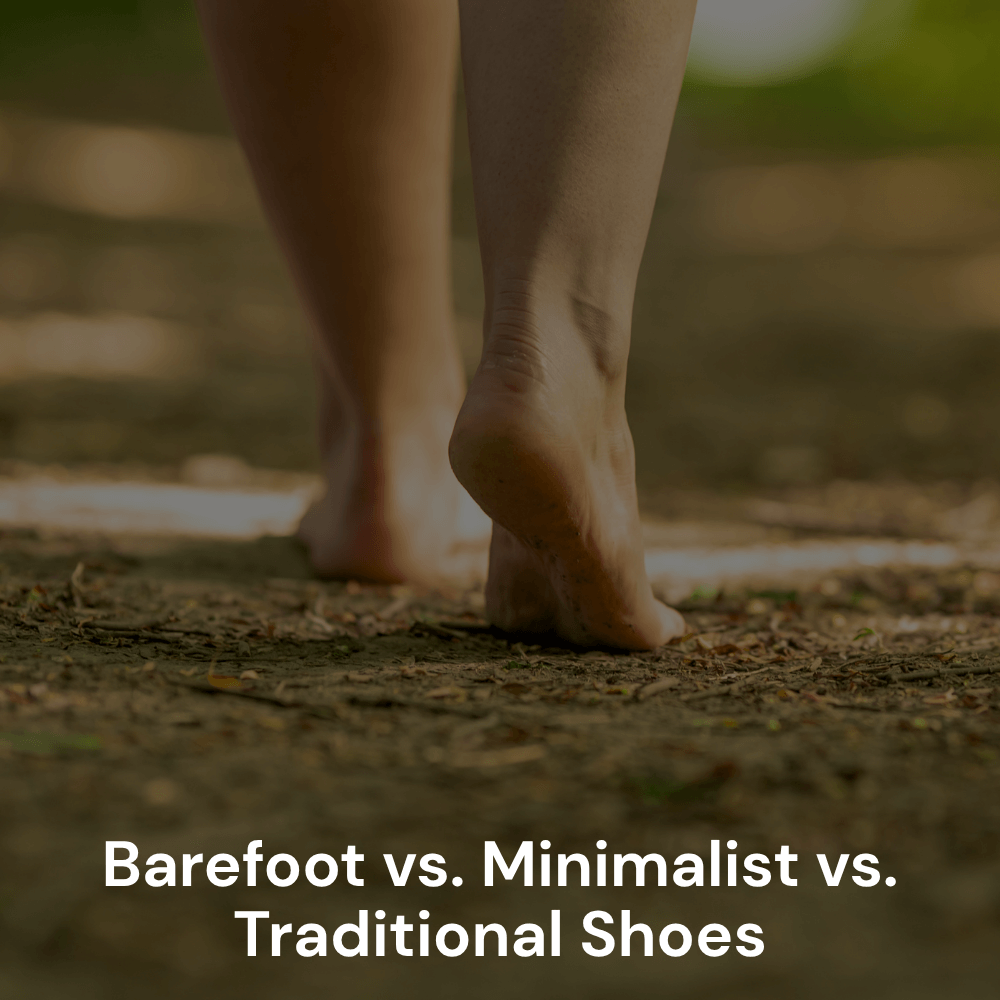
Traditional shoes have a raised, cushioned heel, built-in support and often a tapered toe. Minimalist shoes strip some of that away: lower drop, less cushioning, more flexibility. Barefoot shoes go furthest: zero drop, a thin flexible sole, a wide toe box and no arch support. None of the three is proven to prevent injuries. The right choice depends on what you do in them, how your feet feel, and how gradually you switch.
This guide compares shoe types. It is general information, not medical advice. JOYO sells barefoot shoes, so we have a stake in this topic. External links earn no affiliate commission.
Want to see the differences on real models? Compare women's barefoot shoes or kids' barefoot shoes side by side.
What Are Minimalist Shoes? A Clear Definition
Minimalist shoes are shoes designed to interfere less with how the foot moves. Compared with a traditional shoe, they are lighter, lower to the ground, more flexible, have less heel-to-toe drop, and have fewer stability or motion-control features.
That definition comes from research. A group led by Esculier published a consensus definition and rating scale for minimalist shoes in 2015, called the Minimalist Index. It scores a shoe on five characteristics:
- Weight
- Stack height (how much material is under the foot)
- Heel-to-toe drop
- Flexibility
- Motion-control and stability technologies
The result is a percentage, not a yes or no. A shoe can be "somewhat minimalist" or "very minimalist". Barefoot shoes sit at the far end of that scale. Toe-box width isn't one of the five scores, so check it separately.
The Traditional Running Shoe: A History of Cushion, Control, and Unintended Consequences
For most of human history, people walked and ran barefoot or in thin footwear such as sandals and moccasins. The modern cushioned running shoe, with its raised, padded heel, only appeared in the 1970s, as the authors of a 2010 Nature study led by Daniel Lieberman point out.
Traditional shoes, for running and for everyday wear, usually share a few features:
- A raised heel: often around 8 to 12 mm higher than the forefoot.
- Thick cushioning, especially under the heel.
- Arch support and stability features meant to control how the foot rolls.
- A stiffer sole and often a tapered toe box.
The "unintended consequences" debate is about whether all that cushioning and control changes how we move. One clear effect: the cushioned heel makes it easy to land heel-first when running. Whether that matters for injuries is a separate question, covered in the research section below.
The Minimalist Middle Ground: Less Shoe, More You
Minimalist shoes sit between traditional and barefoot. A typical minimalist shoe might have a low drop (0 to 4 mm), a moderately thin sole and noticeably more flexibility than a traditional trainer, while still keeping some cushioning.
That makes them a common first step away from traditional shoes. You get more ground feel and a flatter platform without going all the way to a thin barefoot sole. The trade-off: "minimalist" is used loosely in marketing, so one brand's minimalist shoe can be much more built-up than another's. Check the actual drop and stack height.
The Barefoot Ideal: Maximum Freedom, Maximum Feedback
Barefoot shoes go as far as a shoe can toward being barefoot while still protecting the foot. Typical features:
- Zero drop: heel and forefoot at the same height.
- A thin sole: often in the 3 to 8 mm range.
- High flexibility: the sole bends and twists easily.
- A wide, foot-shaped toe box so the toes can spread.
- No arch support and no stability features.
- Light weight.
The result is a lot of ground feel and very little between your foot and the surface. That's exactly what fans like, and exactly why the switch needs to be gradual.
Head-to-Head Comparison: A Feature-by-Feature Breakdown
| Feature | Barefoot shoes | Minimalist shoes | Traditional shoes |
|---|---|---|---|
| Heel-to-toe drop | 0 mm | Usually 0 to 4 mm | About 8 to 12 mm |
| Sole thickness | Thin, often 3 to 8 mm | Thin to moderate | Moderate to thick |
| Cushioning | Minimal | Light | Moderate to heavy |
| Flexibility | Very high | High | Low to moderate |
| Toe box | Wide, foot-shaped | Varies by brand | Often tapered |
| Arch support | None | Little or none | Often built in |
| Stability features | None | Few | Common |
| Ground feel | High | Moderate | Low |
| Weight | Light | Light | Moderate to heavy |
| Adjustment needed | Most | Some | None if you already wear them |
For a closer look at drop and stack height, see barefoot vs zero drop shoes.
Biomechanical Impact: How Each Shoe Changes the Way You Move
Shoes change where the work happens. A few well-documented differences:
- Foot strike when running. The 2010 Lieberman study found that habitually barefoot runners usually land on the forefoot or midfoot, and that those forefoot strikers produced smaller collision forces than shod runners landing on the heel. Cushioned, raised heels make heel striking easy. Note that the study looked at people who grew up barefoot, not at people switching shoes.
- Calf and Achilles load. Lowering the heel and landing further forward shifts more work to the calf and Achilles. That's why tight calves are the classic first-week complaint.
- Foot muscle work. Without arch support or a stiff sole, the small muscles of the foot do more. A 2019 randomized study by Ridge and colleagues found that walking in minimalist shoes, built up gradually, increased foot muscle size and strength over 8 weeks.
- Bone loading. Less cushioning means the foot's bones take more of the load at first. A 2013 MRI study found more signs of bone stress in runners who switched to minimalist running shoes over 10 weeks than in those who didn't.
In short: each shoe type moves load around. None makes it disappear.
Are Minimalist Shoes Actually Better? What the Research Says
Better at some things, not proven better overall. Here's an honest summary:
- Foot strength: fairly good evidence that walking in minimalist shoes strengthens the foot muscles (Ridge 2019).
- Injury prevention: no clear evidence either way. A 2022 Cochrane review found only low-certainty evidence and no clear difference in running injuries between cushioned and minimalist shoes.
- Transition risk: switching too fast, especially for running, can overload the foot's bones (Ridge 2013).
- Comfort: very individual. Many people love the feel of minimal shoes; others are more comfortable with cushioning, particularly on hard floors.
So minimalist and barefoot shoes are a reasonable choice for many people, especially for everyday walking, as long as the switch is gradual. They aren't a cure for anything, and traditional shoes aren't automatically harmful.
The Style Factor: Aesthetics from Orthopedic to Chic
Early barefoot shoes looked like gloves for your feet, and the wide toe box still reads as "different" to some people. That has changed a lot. There are now barefoot and minimalist sneakers, boots, flats, sandals and dress shoes, and many look like ordinary casual shoes from a few steps away.
The shape is the one thing that won't change: a shoe that lets the toes spread will look wider at the front than a tapered fashion shoe. Most people stop noticing within a few weeks.
Which Type Is Right for You? A Decision Guide
If You're a Runner
There's no clear injury advantage either way, so choose by preference and transition carefully. If you want to try minimal running shoes, get comfortable walking in them first, then add very short runs and keep most of your mileage in your usual shoes for a few months. A minimalist shoe with some cushioning is a gentler step than a fully barefoot one.
If You Have Foot Pain (Plantar Fasciitis, Bunions, or Flat Feet)
Get the pain assessed first, and ask your clinician about footwear. Some people with these conditions do well in wide, flexible shoes once symptoms settle; others need support or cushioning, at least for a while. A shoe type isn't a treatment, and a sudden switch to minimal shoes can add strain.
If You Stand All Day (Nurses, Retail Workers, Teachers)
Long hours on hard floors are where cushioning earns its keep. A minimalist shoe with a bit more sole, or a zero-drop shoe with moderate cushioning, is often more comfortable than a very thin barefoot sole for a full shift. Check any workplace rules for slip resistance or toe protection too.
If You're New to Natural Footwear
Start in the middle. A minimalist or slightly thicker barefoot shoe for everyday walking, 30 to 60 minutes a day at first, building up over a few weeks. Our barefoot shoes adjustment guide covers the first 30 days week by week.
If You're Looking for Workout Shoes (Gym, CrossFit, Box Jumps)
Many people like flat, flexible shoes for lifting because they put the foot close to the floor. For lots of jumping or running inside a workout, build up gradually, just as you would for running. Choose a sole with enough grip and durability for the floor you train on.
How to Transition from Traditional Shoes to Minimalist or Barefoot Shoes
- Start with walking, 30 to 60 minutes a day, and keep your usual shoes for the rest of the day.
- Add time gradually, only when the previous amount felt fine the next morning.
- Add simple foot and calf exercises such as toe spreads, calf raises and single-leg balance.
- Run last, with very short runs at first and slow increases over months.
- Stop for pain: mild muscle soreness is common, but sharp pain, pain in one spot on a bone, or swelling needs checking.
Walking usually takes a few weeks to feel normal. Running takes longer.
Conclusion: It's Not Just a Shoe, It's a Movement Philosophy
Traditional shoes do more of the work for your feet. Barefoot shoes hand that work back. Minimalist shoes sit in between. The research supports some real benefits of going more minimal, mainly stronger foot muscles, and it also shows that switching too fast carries risk. It doesn't show that any one type prevents injuries.
If the idea appeals to you, start in the middle, switch gradually, and pay attention to how your feet feel. If it doesn't, there's no evidence-based reason to feel bad about cushioned shoes.
Frequently Asked Questions
What are minimalist shoes?
Shoes designed to interfere less with how the foot moves: lighter, lower to the ground, more flexible, with less heel-to-toe drop and fewer stability features than traditional shoes. The Minimalist Index scores how minimalist a shoe is on those five features.
Are minimalist shoes the same as barefoot shoes?
Not quite. Barefoot shoes are the most minimal end of the range: zero drop, a thin flexible sole, a wide toe box and no arch support. Many minimalist shoes keep some cushioning or a small drop.
Are minimalist shoes actually better for your feet?
They give the foot muscles more work, and a 2019 study found walking in them increased foot muscle strength. But a 2022 Cochrane review found no clear evidence that any shoe type prevents injuries, and switching too fast can overload the foot. They're a good option for many people, not a proven upgrade for everyone.
Are minimalist shoes good for flat feet?
It depends on the person. Many people with flexible, pain-free flat feet wear minimalist shoes comfortably. If your flat feet are painful or you've been prescribed orthotics, ask your podiatrist or doctor before switching.
Are minimalist shoes good for walking all day?
Many people find them comfortable for all-day walking once they've adjusted, which usually takes a few weeks. On hard floors for long hours, a minimalist shoe with a little more sole is often easier than a very thin barefoot one.
Can you switch between barefoot shoes and regular shoes?
Yes. Rotating is common and sensible, especially during the transition: barefoot or minimalist shoes for everyday walking, something more cushioned for long days on concrete or long runs.
What's the difference between barefoot and zero drop shoes?
Zero drop only means the heel and forefoot are at the same height. A zero drop shoe can still be thick and cushioned. Barefoot shoes are zero drop plus a thin, flexible sole and a wide toe box. See barefoot vs zero drop shoes.
Are minimalist shoes good for running?
They can be, if you transition slowly. There's no clear evidence they reduce injuries, and switching too quickly can cause bone stress in the foot. Get comfortable walking in them first, then build running very gradually.
How do I transition from traditional shoes to minimalist shoes?
Start with 30 to 60 minutes of walking a day, add time only when your feet feel fine the next morning, include simple foot and calf exercises, and leave running until walking feels easy. Most people adjust for walking within a few weeks.
Are barefoot shoes better than cushioned shoes for exercise?
It depends on the exercise. Flat, flexible shoes suit many gym and lifting sessions. For running and lots of jumping, neither type has a proven injury advantage, so pick what's comfortable and build up gradually if you're switching.
Sources
- Esculier JF, et al. A consensus definition and rating scale for minimalist shoes. Journal of Foot and Ankle Research, 2015.
- Lieberman DE, et al. Foot strike patterns and collision forces in habitually barefoot versus shod runners. Nature, 2010.
- Ridge ST, et al. Walking in Minimalist Shoes Is Effective for Strengthening Foot Muscles. Medicine & Science in Sports & Exercise, 2019.
- Ridge ST, et al. Foot bone marrow edema after a 10-wk transition to minimalist running shoes. Medicine & Science in Sports & Exercise, 2013.
- Relph N, et al. Running shoes for preventing lower limb running injuries in adults. Cochrane Database of Systematic Reviews, 2022.
Revised 22 October 2026 by JOYO Editorial. Study findings are summarized from the published abstracts. Typical ranges in the comparison table are general guidance, not test results. Read how we compile comparisons.