A zero drop shoe has the heel and the forefoot at the same height (0 mm drop). A barefoot shoe is zero drop too, but it also has a thin, flexible sole and a wide, foot-shaped toe box. So every true barefoot shoe is zero drop, but most zero drop shoes are not barefoot shoes. A zero drop running shoe can still have 30 mm of cushioning under your foot.
This guide explains shoe specifications. It is not medical advice and not a treatment plan. JOYO sells shoes and also compares other brands, so we have a stake in this topic. External links earn no affiliate commission.
Barefoot vs Zero Drop Shoes: Understanding the Key Differences
The two terms get used as if they mean the same thing. They don't. "Zero drop" is one measurement. "Barefoot" is a whole design approach that includes zero drop plus a few other features. Below we go through what each one means, how they compare with regular shoes, what the research actually shows, and how to pick between them.
What Is a Zero Drop Shoe?
A zero drop shoe is any shoe where the heel and the forefoot sit at the same height, so there is a 0 mm difference (the "drop") between them. Most traditional running shoes have a drop of roughly 8 to 12 mm, and many everyday shoes sit in a similar range.
Zero drop describes the heel-to-toe difference and nothing else. A zero drop shoe can still be thick, soft, stiff or narrow. What makes it zero drop is only that the heel is not raised above the forefoot. Think of standing on a flat floor instead of a small wedge.
What Does Zero Drop Mean in Shoes?
"Drop" (also called heel-to-toe offset) is the height under your heel minus the height under your forefoot, in millimeters. A shoe with 30 mm under the heel and 20 mm under the forefoot has a 10 mm drop. A shoe with 30 mm under both has 0 mm drop, and so does a shoe with 5 mm under both. Those two zero drop shoes will feel very different, because drop says nothing about how much material is underfoot. That second number is called stack height.
A real example: the Altra Torin 8 men's specification lists a 30 mm heel and 30 mm forefoot stack. That is zero drop with a lot of cushioning. We mention it to show the difference, not as a recommendation.
Typical drop ranges look like this:
- Traditional running shoes: about 8 to 12 mm
- Low-drop shoes: about 4 to 8 mm
- Zero drop shoes: 0 mm, any stack height
- Barefoot shoes: 0 mm, with a thin sole
Brands measure stack and drop in different ways (some include the insole, some don't), so compare the exact model and version rather than the brand name.
What Are Barefoot Shoes?
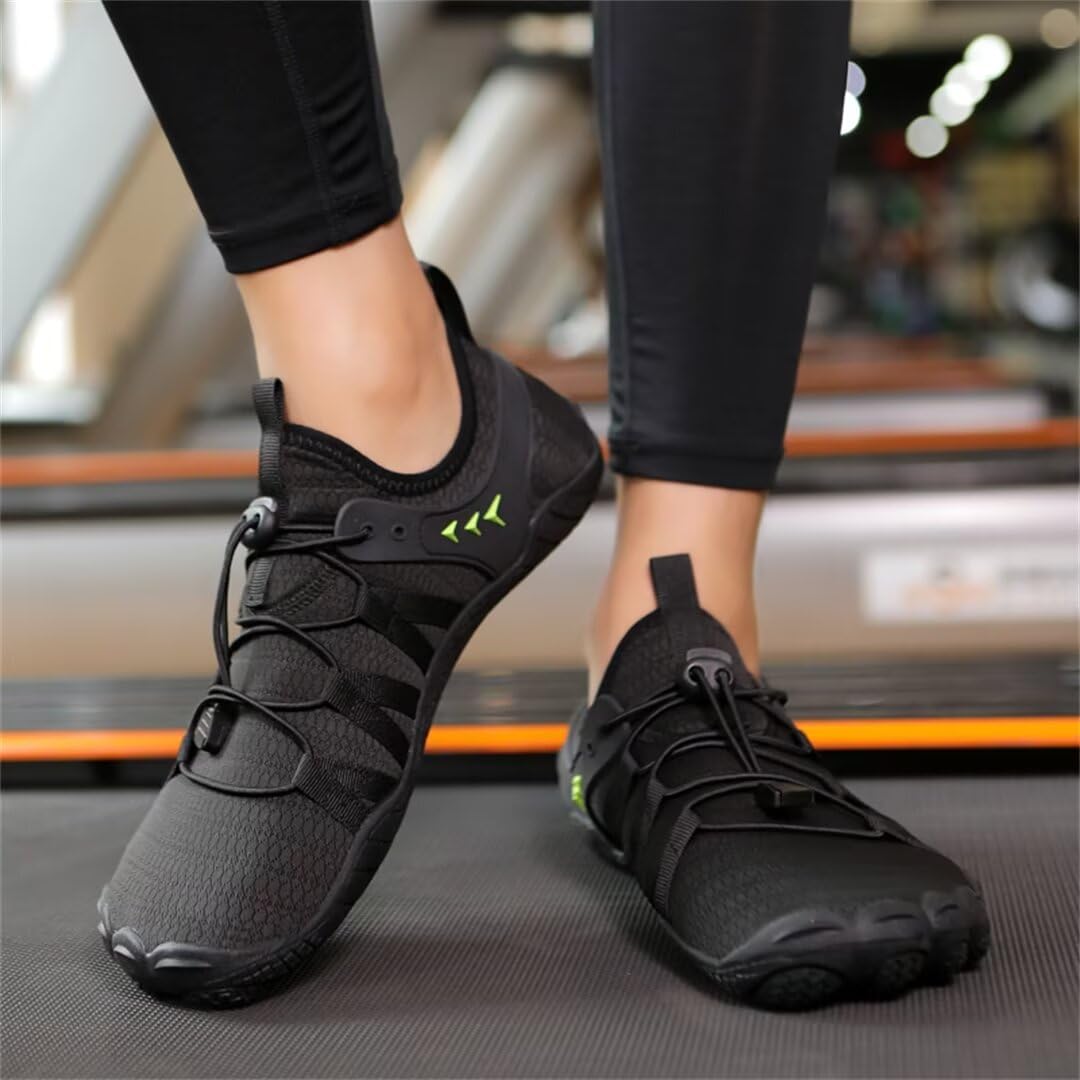
Barefoot shoes are minimalist shoes designed to let your foot move and feel the ground much like it would barefoot, while still protecting it from the surface. They usually combine a thin, flexible sole, a wide toe box, zero drop and no built-in arch support.
Typical features:
- Thin sole: often in the 3 to 8 mm range, so you can feel the ground underneath
- Wide toe box: shaped like a foot rather than a point, so toes can spread
- Zero drop: heel and forefoot at the same height
- High flexibility: the sole bends and twists easily
- No arch support: nothing shaped or raised under the arch
- Lightweight: usually noticeably lighter than a cushioned trainer
"Minimalist" is a broader word than "zero drop". Researchers led by Esculier published a consensus definition and rating scale for minimalist shoes (2015), the Minimalist Index. It scores five things: weight, stack height, heel-to-toe drop, flexibility, and motion-control or stability features. Barefoot shoes score high on all five. A zero drop shoe with a thick, stiff sole scores high on only one.
Are All Barefoot Shoes Zero Drop?
Yes, true barefoot shoes are zero drop. A flat platform is part of what makes a shoe "barefoot". The reverse is not true: most zero drop shoes are not barefoot shoes.
A zero drop shoe can have thick cushioning, a rigid sole and a tapered toe box and still be zero drop. Plenty of zero drop running shoes have 25 to 30 mm of foam underfoot. Barefoot shoes take the flat platform and also thin out the sole, make it flexible and widen the toe box. Put simply, barefoot shoes are a subset of zero drop shoes.
One practical tip: "barefoot" is a marketing word, not a certification. Check the product's stated drop and stack height instead of trusting the label.
Barefoot Shoes vs Zero Drop Shoes: Key Differences
Both share the flat platform. Where they differ is everything else.
Cushioning and Protection
Barefoot shoes have very little cushioning. They protect against sharp objects and rough surfaces, but you feel the ground.
Zero drop shoes can have anything from a thin sole to 30 mm or more of foam while staying flat. More foam means more cushioning on hard surfaces and long distances, and less ground feel.
Sole Flexibility
Barefoot shoes bend and twist easily in every direction, so the foot moves through its normal range of motion.
Zero drop shoes range from flexible to fairly stiff. Trail models in particular often have stiffer soles or rock plates for protection.
Toe Box Width
Barefoot shoes almost always have a wide, foot-shaped toe box. It is one of the defining features.
Zero drop shoes vary a lot. Some have roomy toe boxes, others keep a conventional tapered shape on a flat sole. "Wide" on a product page is also not a measurement, so compare the shoe's shape with your foot.
Ground Feel
Barefoot shoes let you feel texture and changes in the surface through the thin sole.
Zero drop shoes with more cushioning give less ground feel. The trade-off is more comfort on concrete and over long distances.
Comparison Table: Zero Drop vs Barefoot vs Traditional Shoes
| Feature | Barefoot shoes | Zero drop shoes | Traditional shoes |
|---|---|---|---|
| Heel-to-toe drop | 0 mm | 0 mm | About 8 to 12 mm |
| Sole thickness (stack) | Thin, often 3 to 8 mm | Anything from thin to 30 mm+ | Usually moderate to thick |
| Cushioning | Minimal | None to heavy | Moderate to heavy |
| Flexibility | Very high | Varies by model | Low to moderate |
| Toe box | Wide, foot-shaped | Varies by brand | Often tapered |
| Ground feel | High | Low to moderate | Low |
| Arch support | None | None to some | Often built in |
| Weight | Light | Light to moderate | Moderate to heavy |
| Good fit for | People who want a close-to-barefoot feel | People who want a flat platform with cushioning | People who prefer structure and a raised heel |
A reading rule that saves a lot of confusion: compare like with like. An outsole-only number is not a full stack measurement, and two brands may measure drop at different points.
Compare the idea on actual shoes
See how these specifications play out on real models in Vivobarefoot vs Lems, or compare fit and insole details in Vivobarefoot vs Xero for women.
Benefits of Zero Drop Shoes
You will find long lists of zero drop benefits online, many of them stated as fact. The honest picture is narrower. Here is what zero drop and minimalist shoes plausibly offer, and what the research does and doesn't support.
1. A flat, natural foot position
This one is true by definition. Your heel isn't lifted, so your foot sits the way it does when you stand barefoot on a flat floor. Many people simply find that more comfortable once they are used to it.
2. Foot muscles get more work
This is the best-supported benefit, and it comes from minimalist shoes rather than zero drop alone. In a 2019 randomized study by Ridge and colleagues (Medicine & Science in Sports & Exercise), 57 runners were split into three groups. Those who gradually walked more each week in minimalist shoes increased foot muscle size and strength over 8 weeks, about as much as a group doing foot-strengthening exercises. The control group did not change.
3. A different landing pattern when running
A 2010 study in Nature led by Daniel Lieberman at Harvard found that habitually barefoot runners usually land on the forefoot or midfoot, and that forefoot strikers produced smaller collision forces than shod heel strikers. The raised, cushioned heel of a modern running shoe makes heel striking easier. Note what this study measured: runners who grew up barefoot, not people switching shoes. It doesn't prove that a zero drop shoe will change your stride or prevent injury.
4. Room for the toes
Many zero drop and barefoot shoes pair the flat sole with a wide toe box, so toes aren't squeezed into a point. That is a design and comfort feature. It is not a treatment for bunions or other toe conditions.
5. Options for almost every activity
Zero drop now exists in road and trail running shoes, hiking boots, casual sneakers and sandals. If you like the flat platform but want cushioning for concrete or long distances, a cushioned zero drop shoe gives you both.
What the research does not show
Zero drop is not proven to prevent injuries. A 2022 Cochrane review of running shoes (Relph and colleagues) found only low-certainty evidence, and no clear difference in injury risk between cushioned and minimalist shoes for adult runners. Claims that a flat sole fixes posture, cures plantar fasciitis or protects your knees go beyond what the evidence supports. And switching too fast carries its own risk, which we cover in the transition section below.
Are Zero Drop Shoes Good for Walking?
Yes, zero drop shoes work well for walking for most people, as long as the rest of the shoe fits your needs. Walking is lower impact than running, so the adjustment is usually easier. In the Ridge 2019 study above, walking in minimalist shoes was also the activity that strengthened the foot muscles.
What matters for walking beyond the drop:
- Cushioning for your surfaces: long days on concrete call for more stack than walks on grass or trails
- Toe room: your toes should lie flat and spread without touching the sides
- Grip: check the outsole for wet pavement or trails
- Fastening: the heel should stay put without the shoe feeling tight
If you are coming from shoes with a high drop, start with shorter walks and build up over a few weeks. Calf tightness early on is common.
Are Zero Drop Shoes Good for Flat Feet?
It depends on your feet, and it is a question for a clinician if your flat feet are painful. Many people with flat feet wear zero drop shoes comfortably. Others need arch support.
Flat feet come in two broad types. Flexible flat feet, where an arch appears when you sit or stand on tiptoe, are common and often cause no problems. Rigid flat feet, where the arch never forms, are a structural condition and deserve a professional assessment before any footwear change.
If your flat feet don't hurt and you want to try zero drop, a sensible route is a cushioned zero drop shoe rather than a fully minimal one, short wear periods at first, and a gradual increase. If you have pain, have been prescribed orthotics, or have a diagnosed condition, talk to your podiatrist or doctor first. A shoe label can't tell you what your foot needs.
When Should You Choose Barefoot Shoes Over Zero Drop Shoes?
Barefoot shoes tend to suit you when:
- You want maximum ground feel: you like sensing the surface under your feet
- You want your feet to do more of the work: thin, flexible soles give the foot muscles more to do
- You want plenty of toe room: a wide toe box is standard in barefoot designs
- Your days are short to moderate on your feet: errands, casual walking, light hikes, indoors
- You are already used to minimal footwear
Cushioned zero drop shoes tend to suit you when:
- You need cushioning: running on pavement, long hiking days, standing for hours
- You are transitioning: a flat platform with familiar cushioning is a gentler first step
- You want one versatile pair: for mixed activities
- You need protection: rocky trails or rough ground
Many people who wear minimal footwear rotate between the two. For a wider comparison that includes regular shoes, read Barefoot vs Minimalist vs Traditional Shoes.
Compare shoes by fit and use
Compare women's barefoot shoes for everyday, work and outdoor needs, or browse children's shoes by stage. Both guides link to retailers so you can check current sizes and terms.
If you don't know your foot length and width yet, start with our foot-measuring guide.
How to Transition to Zero Drop or Barefoot Shoes
Going too fast is the most common mistake. If you have worn raised heels for years, your calves, Achilles tendons and feet are used to that position. A 2013 MRI study by Ridge and colleagues followed 36 experienced runners for 10 weeks. In the group that switched to minimalist running shoes, 10 of 19 showed increased bone stress (bone marrow edema) in at least one foot bone, more than in the group that kept their usual shoes. The researchers' advice was to transition very slowly.
There's no single schedule that is right for everyone, but a cautious pattern looks like this:
- Start short: wear the new shoes for 30 to 60 minutes a day of walking, and keep your usual shoes the rest of the time.
- Build gradually: add time each week as long as your feet and calves feel fine the next day.
- Walk before you run: get comfortable walking all day before running in them, and build running distance even more slowly.
- Back off if it hurts: mild calf tightness is common. Sharp or lasting pain, especially in the bones of the foot, is a reason to stop and get it checked.
Walkers usually adapt within a few weeks. Runners should expect it to take a couple of months or more. For what the first month usually feels like, see the barefoot shoe adjustment period.
Frequently Asked Questions (FAQs)
What is a zero drop shoe?
A zero drop shoe has the heel and the forefoot at the same height, with 0 mm difference between them. Traditional shoes usually raise the heel about 8 to 12 mm above the toes. Zero drop shoes can be thin and minimal or thick and heavily cushioned. The term only describes the heel-to-toe difference.
What does zero drop mean in shoes?
"Drop" is the height under the heel minus the height under the forefoot, in millimeters. Zero drop means that difference is 0 mm, so the heel and toes are level, the same position as standing barefoot on flat ground.
Are all barefoot shoes zero drop?
Yes, true barefoot shoes are zero drop. But most zero drop shoes are not barefoot shoes, because they can still have thick cushioning, stiff soles or narrow toe boxes. Barefoot shoes add a thin, flexible sole and a wide toe box on top of the flat platform. Check the product specification rather than the label.
What are the benefits of zero drop shoes?
A flat, natural foot position, more work for the foot muscles (especially in minimal, flexible versions), often more toe room, and options for almost every activity. A 2019 randomized study found that walking in minimalist shoes increased foot muscle size and strength over 8 weeks. Zero drop shoes have not been shown to prevent injuries, and switching too fast can cause problems.
Are zero drop shoes good for walking?
Yes, for most people. Walking is lower impact than running, so the adjustment is easier. Choose cushioning for the surfaces you walk on, make sure the toes have room, and build up wear time over a few weeks if you are used to raised heels.
Are zero drop shoes good for flat feet?
Many people with flexible, pain-free flat feet wear them comfortably, often starting with a cushioned zero drop shoe. If your flat feet are painful, rigid, or you have been prescribed orthotics, talk to a podiatrist or doctor before switching.
Are zero drop shoes better for your knees?
There's no clear evidence that they are. Changing shoes shifts load around the leg. Lower-drop shoes tend to put a bit more demand on the calves and Achilles and less on other areas, but the 2022 Cochrane review found no clear difference in injury risk between shoe types. If you have knee pain, get it assessed rather than relying on a shoe change.
What is the difference between zero drop and barefoot shoes?
Zero drop only means the heel-to-toe difference is 0 mm. Barefoot shoes are a narrower category: zero drop plus a thin sole, high flexibility, a wide foot-shaped toe box, no arch support and low weight. All barefoot shoes are zero drop; most zero drop shoes are not barefoot shoes.
Are zero drop shoes good for plantar fasciitis?
We can't recommend a shoe as a treatment for plantar fasciitis. Some people find a flat, roomy shoe comfortable once their symptoms settle, while others need support or cushioning during recovery, and a sudden switch to minimal shoes can add strain. Your podiatrist or doctor is the right person to advise on footwear while you are treating it.
How long does it take to adjust to zero drop shoes?
For walking, usually a few weeks. For running, often a couple of months or more. Start with 30 to 60 minutes a day and increase gradually. Mild calf or Achilles tightness is common at first. Sharp or lasting pain, especially in the bones of the foot, means you should slow down and get it checked.
Are zero drop shoes good for standing all day?
A zero drop shoe with enough cushioning can be comfortable for long days on your feet, and many people prefer a flat platform for standing. A very thin barefoot sole may feel hard on concrete for a full shift. If you stand on hard floors all day, look for more stack height, and check any workplace footwear rules.
Who should NOT wear zero drop shoes?
Be cautious, and ask a clinician first, if you have an Achilles or calf injury (zero drop puts more demand on the Achilles), painful or rigid flat feet, an active foot condition, prescribed orthotics, or you are recovering from foot or ankle surgery. Anyone who needs to run long distances right away without a transition period should also hold off.
What is the difference between zero drop and minimalist shoes?
Zero drop is one feature: 0 mm heel-to-toe difference. Minimalist is a broader rating. The Minimalist Index scores weight, stack height, drop, flexibility and stability features. A thick, stiff zero drop shoe scores low as a minimalist shoe; a thin, flexible barefoot shoe scores high.
What is zero drop footwear?
Any shoe, boot or sandal where the heel and forefoot sit at the same height. It started mainly in running shoes and now includes hiking boots, casual shoes, sandals and work footwear.
Benefits of thicker sole zero drop shoes?
You keep the flat platform and add cushioning: more comfort on hard surfaces, more protection on rough trails, and a gentler transition from traditional shoes because the cushioning feels familiar. The trade-off is less ground feel and usually less flexibility.
Conclusion: Which Is Right for You?
Barefoot shoes and zero drop shoes share the flat platform but serve different needs. Barefoot shoes are for people who want to feel the ground and let their feet do more of the work. Cushioned zero drop shoes are for people who want a level foot position without giving up protection and comfort on hard surfaces.
If you are new to both, a cushioned zero drop shoe is the easier first step, and you can move toward more minimal options later. Whatever you choose, check the actual drop, stack height, flexibility and toe room of the model, and make the switch gradually.
Sources and editorial method
- Ridge ST, et al. Walking in Minimalist Shoes Is Effective for Strengthening Foot Muscles. Medicine & Science in Sports & Exercise, 2019.
- Lieberman DE, et al. Foot strike patterns and collision forces in habitually barefoot versus shod runners. Nature, 2010.
- Ridge ST, et al. Foot bone marrow edema after a 10-wk transition to minimalist running shoes. Medicine & Science in Sports & Exercise, 2013.
- Esculier JF, et al. A consensus definition and rating scale for minimalist shoes. Journal of Foot and Ankle Research, 2015.
- Relph N, et al. Running shoes for preventing lower limb running injuries in adults. Cochrane Database of Systematic Reviews, 2022.
- Altra Torin 8 men's specification (manufacturer-reported stack and drop).
Revised 22 October 2026 by JOYO Editorial. Study findings are summarized from the published abstracts. Typical ranges in the comparison table are general guidance, not test results. This article is general information, not medical advice. Read how we compile comparisons.